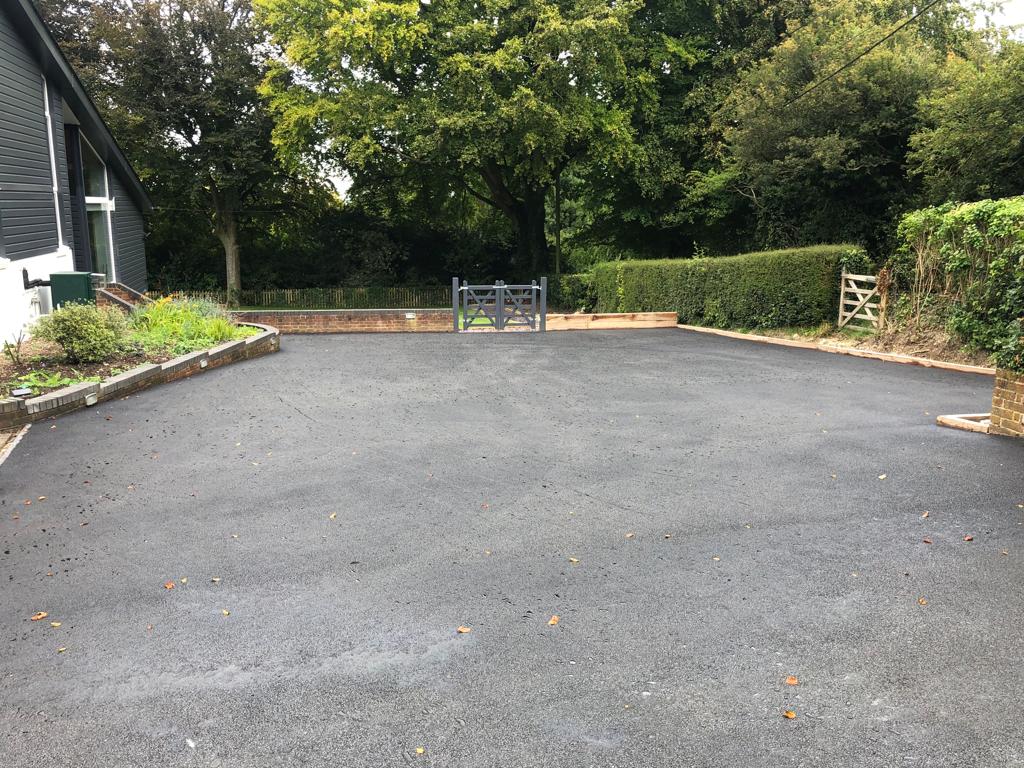
Potholes rarely develop without earlier warning signs. Before an asphalt or bitumen surface breaks apart and forms an open hole, there are often smaller defects such as cracking, loose aggregate, depressions, deteriorating edges or drainage problems. Identifying and addressing these issues early can significantly reduce the conditions that allow potholes to develop.
For property owners and businesses in Canungra, QLD, routine surface maintenance can play an important role in preserving driveways, access roads, car parks and other paved areas. While maintenance cannot guarantee that a pothole will never occur, it can help protect the pavement from avoidable deterioration and provide an opportunity to repair developing weaknesses before they become more extensive.
How Does a Pothole Actually Form?
Understanding pothole prevention begins with understanding how the damage develops.
An asphalt or bitumen surface depends on the supporting pavement underneath. When the surface remains intact and the base is stable, vehicle loads can be distributed through the pavement effectively.
Problems can begin when cracks or other defects allow water to enter. Moisture can affect the supporting materials, while repeated vehicle movements place pressure on the weakened section from above.
The surface may then crack further, loosen and eventually break away, leaving the depression recognised as a pothole.
Why Routine Inspections Matter
One of the simplest forms of preventative pavement maintenance is regular inspection.
A surface does not need to be professionally examined every time a small mark appears, but property owners should become familiar with its general condition and watch for noticeable changes.
Useful warning signs include:
- New or widening cracks
- Loose aggregate
- Small depressions
- Crumbling asphalt
- Broken pavement edges
- Water pooling after rainfall
- Deterioration around previous repairs
- Small areas beginning to break apart
Finding these problems early provides an opportunity to investigate them before regular traffic and water cause additional deterioration.
Crack Maintenance Can Reduce Water Penetration
Small cracks can appear relatively insignificant compared with a pothole, but they can be an important early stage in pavement deterioration.
An open crack creates a pathway through the asphalt surface. If water repeatedly enters the pavement, supporting materials can become increasingly vulnerable.
Cracks should therefore be monitored for changes in width, length and surrounding condition.
Appropriate crack treatment at the right stage can help restrict moisture penetration and preserve the surrounding pavement. Where cracking is extensive or associated with movement, however, further investigation may be required rather than simply treating the opening.
Small Surface Failures Should Be Repaired Promptly
Potholes frequently become larger because traffic continues travelling over pavement that has already started breaking apart.
Once a small section becomes loose, tyres can dislodge additional material. The exposed edges receive further impacts, causing the damaged area to gradually expand.
Repairing a small localised failure before this process progresses can help retain more of the surrounding asphalt.
A professional repair should remove unsuitable material and restore adequate support rather than simply covering loose pavement.
Drainage Is an Important Part of Pothole Prevention
Surface maintenance should include attention to water movement, not only the asphalt itself.
If rainfall consistently remains on a pavement or flows through an already damaged area, moisture can repeatedly reach vulnerable sections.
Property owners should pay attention to:
- Persistent puddles
- Water collecting in wheel paths
- Runoff crossing cracked pavement
- Low areas that remain wet
- Erosion around pavement edges
- Water flowing towards previous repairs
Correcting the cause of persistent water accumulation can be just as important as repairing the visible pavement damage.
Depressions Can Become Future Problem Areas
A depression does not need to contain a pothole to warrant investigation.
Low areas can indicate settlement or movement within the pavement. They can also collect rainfall, concentrating water in one particular location.
If cracking subsequently develops around the depression, moisture has an easier pathway into the supporting pavement.
Investigating noticeable changes in pavement level can therefore help identify conditions that may eventually contribute to pothole formation.
Loose or Crumbling Asphalt Is an Early Warning Sign
Asphalt that begins shedding aggregate or breaking apart should not be ignored.
Loose surface material can indicate that the wearing layer is losing integrity. Continued traffic may accelerate the process by removing additional material.
Where deterioration remains localised, timely repair may prevent it from developing into an open pothole.
Widespread crumbling or general surface deterioration may indicate that the pavement requires broader maintenance or resurfacing rather than individual patch repairs.
Pavement Edges Need Maintenance Too
Pothole prevention should not focus exclusively on the centre of the pavement.
Edges can become vulnerable where surrounding material erodes, support is inadequate or vehicles repeatedly travel close to the pavement boundary.
Once an edge begins cracking and breaking away, damage can gradually move towards the main trafficable area.
Maintaining edge support and addressing erosion early can help protect the pavement from progressive deterioration.
Previous Repairs Should Be Monitored
A properly completed pothole repair can restore a damaged pavement section, but repaired areas should still be observed as part of routine maintenance.
New cracking, settlement or separation around a patch can indicate that surrounding pavement is beginning to deteriorate.
Pay attention if:
- Cracks form around repair boundaries
- The patch begins sinking
- Water collects over the repaired area
- Asphalt beside the repair starts crumbling
- Another pothole develops nearby
Early investigation can help determine whether the issue is confined to the repair boundary or reflects a wider problem underneath.
Traffic Patterns Can Influence Where Potholes Develop
Some pavement areas experience considerably more stress than others.
Regular wheel paths, turning points, entrances and locations where vehicles brake or manoeuvre can experience concentrated loading.
If the pavement underneath these areas becomes weak, repeated traffic can accelerate deterioration.
Routine inspections should therefore give additional attention to heavily used sections rather than treating every part of the pavement as though it experiences identical conditions.
Maintenance Should Address the Cause, Not Just the Appearance
Preventative maintenance is most effective when it considers why a defect has developed.
For example, repeatedly repairing a small broken area without addressing water pooling over it may provide only temporary improvement. Similarly, treating cracks above an unstable base may not prevent them from returning.
When defects recur, the pavement should be assessed for underlying factors such as drainage, settlement, base instability or repeated traffic loading.
This helps prevent maintenance from becoming a cycle of repeatedly treating the same visible symptoms.
When Can Localised Repairs Help?
Local repairs can be highly effective when defects are limited and the surrounding pavement remains stable.
The appropriate work depends on the type and depth of deterioration. It may involve removing damaged asphalt, correcting underlying material where necessary, compacting the repair and restoring the surface.
Completing this work before the damaged area expands can help preserve neighbouring pavement that remains in good condition.
Can Resurfacing Help Prevent Further Deterioration?
There comes a stage in the life of an asphalt pavement when numerous minor repairs may no longer be the most practical maintenance strategy.
If the surface has become generally worn, extensively cracked or affected by widespread minor deterioration while the underlying pavement remains stable, resurfacing may be appropriate.
Before resurfacing, significant defects should be repaired and the existing pavement assessed for suitability.
A properly prepared new surface can renew the wearing layer and provide additional protection to the serviceable pavement underneath.
When Is Maintenance No Longer Enough?
Routine maintenance has limitations.
If a pavement has developed widespread structural cracking, severe rutting, substantial settlement or extensive base failure, preventative surface treatments cannot restore the stability that has already been lost.
Signs of deeper failure can include:
- Potholes repeatedly returning after repair
- Large areas sinking or moving
- Extensive interconnected cracking
- Deep wheel ruts
- Widespread deformation
- Numerous failing patches
In these situations, deeper pavement rehabilitation or reconstruction may need to be considered.
Recognising this distinction prevents maintenance treatments from being used where structural work is actually required.
Why Timing Makes Such a Difference
Pavement deterioration is often progressive.
A fine crack can widen. Water can penetrate the opening. The supporting pavement can weaken. Traffic can then cause movement, followed by surface break-up and eventually a pothole.
Maintenance is most valuable when it interrupts this sequence early.
The objective is not to carry out unnecessary work whenever a small imperfection appears. It is to recognise meaningful signs of deterioration and address them before they develop into wider pavement damage.
A Planned Maintenance Approach Can Protect the Whole Surface
Rather than waiting until potholes become the main indicator that work is required, property owners can take a broader approach to pavement condition.
Regularly checking cracking, drainage, edges, previous repairs and high-traffic areas provides a clearer picture of how the entire surface is performing.
Professional assessment can then be arranged when deterioration begins changing noticeably or when the same problems repeatedly return.
This approach helps maintenance focus on preserving serviceable pavement rather than waiting for sections to fail completely.
Conclusion
Routine surface maintenance can help prevent many of the conditions that lead to potholes. Timely crack repairs, attention to drainage, maintenance of pavement edges and prompt treatment of small areas of deterioration can reduce water penetration and help preserve the supporting pavement.
However, pothole prevention is not simply about filling cracks or patching damaged asphalt. Recurring defects, settlement and widespread pavement movement can indicate deeper problems that require more substantial attention. Identifying the underlying cause is essential when selecting the appropriate treatment.
Canungra Asphalt & Bitumen Surfacing provides professional asphalt and bitumen surfacing, maintenance and pothole repair services throughout Canungra, QLD. If your pavement is beginning to crack, crumble or develop small areas of failure, our team can assess its condition and recommend an appropriate maintenance or repair approach to help prevent further deterioration.
Call us on: 07 5241 1492
Click here to find out more about Canungra Asphalt & Bitumen Surfacing
Click here to complete our contact form and see how we can help with your Asphalt and Bitumen Surfacing needs.